
Brooks County Value Types
Name the number first. Georgia's fair market value standard asks what a property would bring in an arm's-length cash sale. The buyer and seller must both be willing parties. The assessed figure then applies the legal ratio or a special class. Taxable value reflects further exemption adjustments. A deed or PT-61 can carry the actual consideration from a completed transfer.
| Value Type | Meaning | Official Record |
|---|---|---|
| Fair market value | The assessor's estimate under Georgia's willing-buyer and willing-seller standard | Brooks Tax Assessor digest |
| Assessed value | Generally 40% of market value for ordinary property | Brooks Tax Assessor record |
| Taxable value | The tax base after applicable exemptions or special treatment | Assessment and tax records |
| Recorded sale consideration | The amount reported with a transfer when the deed or PT-61 makes it available | GSCCCA or Clerk file |
These figures are not interchangeable. A mass-appraisal estimate can sit far from a recent sale price, and an exemption may cut taxable value without touching fair market value at all. A farm or conservation classification changes the method itself. Carry the date, parcel number, and value label with every figure.
Brooks County Assessment Math
The Georgia Department of Revenue explains the basic rule. Property is generally assessed at 40% of fair market value under O.C.G.A. §48-5-7. That ratio explains the gap. The assessed figure on an ordinary Brooks County parcel usually runs well below the market figure. The official state valuation page sets the assessment level beside the fair market value standard. That keeps the two ideas distinct.
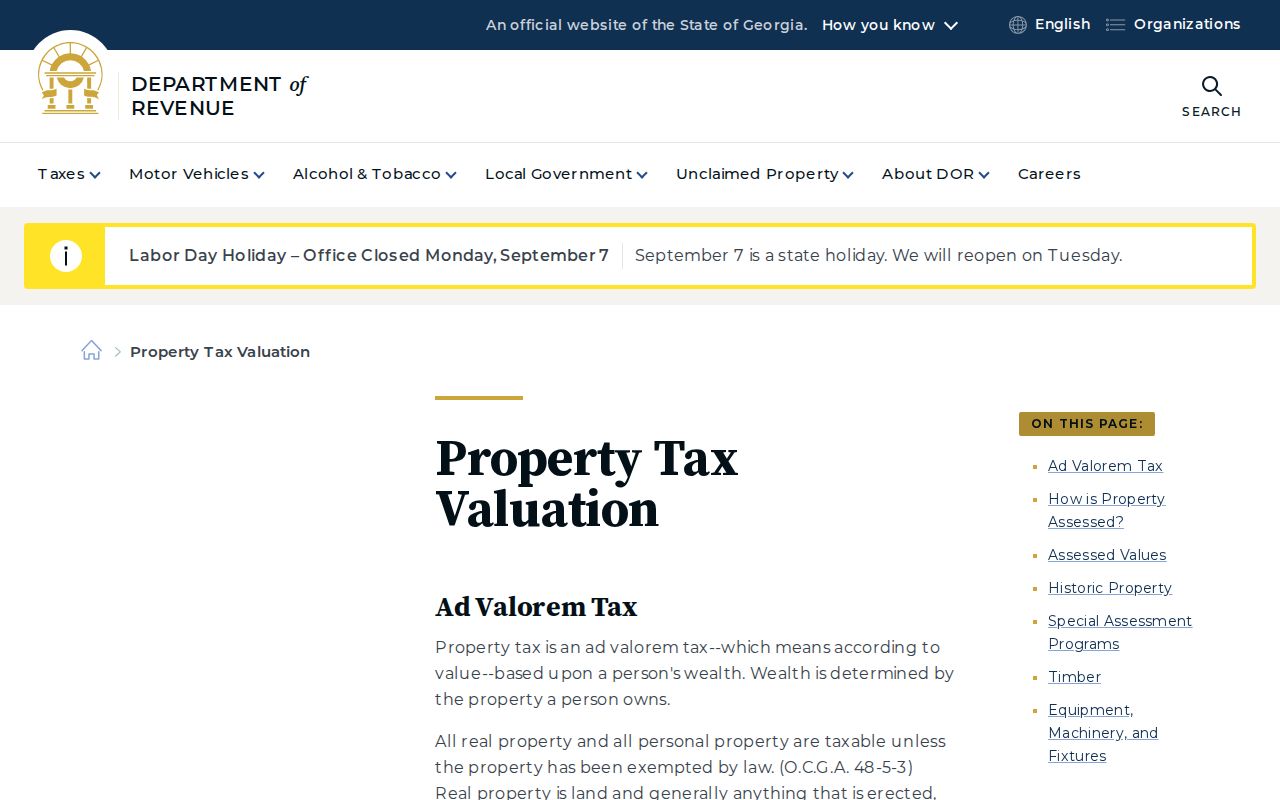
The state guidance helps separate a county assessment from a likely sale price. The 40% rule is not universal, though. Agricultural preferential valuation may use 30% of fair market value. Conservation-use carries its own covenants and possible penalties. A rural Brooks tract may need its class record before any simple ratio makes sense.
Brooks Rural Value Classes
Brooks County describes itself as agricultural, so special land treatment is no side issue. The assessor grants qualifying agricultural-covenant exemptions. The assessor also keeps the digest. A parcel card may reflect use-based treatment far from an ordinary home or business tract. Read the class, acreage, land description, and any covenant together. A low figure does not signal a bargain. It may simply show the legal method applied to that parcel. Eligibility rules and penalties must come from the current assessor and state law.
Find Brooks County Property Value
The Brooks County QPublic landing page is the official assessor entry point for a Brooks County property search. It states that the public data reflects the most current published digest. The underlying Schneider search tool can require an account, so exact live filters and value-field labels vary by session.
- Open QPublic and use only the address, owner, or parcel controls that the live system displays.
- Copy the parcel number, stated market and assessed figures, class, exemptions, and tax year.
- Check the latest recorded deed or PT-61 for sale consideration when that information is available.
- Date the comparison and ask the assessor about a missing field, class, or stale-looking digest entry.
- Assessment amount
- The figure produced by applying an assessment level or special valuation rule to market value.
- Fair market value
- The assessor's estimate under the state's arm's-length sale standard.
- Assessment level
- The legal ratio between market and assessment figures for the property class.
- Sale consideration
- The amount reported with a recorded transfer, when publicly shown.
- Reassessment
- A new value for a later assessment cycle, not merely a change to the tax rate.
Date Brooks County Value Records
The assessor publishes annual assessment notices covering 2024, 2025, and 2026. That confirms a yearly notice trail. The county states no fixed interval for updating the live digest after each sale or parcel change. A current tax roll can still trail a just-recorded deed. Keep the notice year visible. Compare a value only against records from the same period and class. When a sale closes recently, the deed may establish the transfer first. The assessor record may show a new owner of record or a later valuation cycle only afterward. Timing explains many apparent conflicts without proving which value is right.
Note: A newer deed can precede the digest update, while the next assessment may use a different valuation date.
Brooks Sale Price Evidence
The Brooks County Clerk of Superior Court records real-estate instruments. GSCCCA supplies the statewide index layer. A recorded deed or PT-61 can offer sale evidence. The index may require an account, and image access is not always free. The clerk handles certified and locally retained copies. Use the GSCCCA Real Estate Name Search with Brooks County. Enter a grantor or grantee, instrument type, and date range. Then confirm the image or book and page. A transfer amount can reflect related parties. It may also reflect an estate, a gift, a foreclosure, or a tax sale. Treat it as evidence of that transaction, not an automatic market appraisal.
Brooks Exemptions Change Taxable Value
Georgia homestead rules give a qualifying owner-occupant a window to apply. The owner must own and occupy a legal residence on January 1. The deadline is April 1. The standard state exemption removes $2,000 from the 40%-assessed amount. Senior, disability, surviving-spouse, and school rules all differ. An exemption changes the taxable base, not the county's stated fair market figure. That distinction matters when two similar homes carry different tax bills. The state freeze list does not include Brooks. Assume no local freeze without a current county source.
Brooks Market Context
Location records help explain why two tracts deserve closer review, though they calculate nothing. The 2022 assessor minutes list countywide groupings such as Jamar with 178 parcels. Green Meadows appears with 177. Those counts and subdivision keys help match a parcel to its setting on the plat. They also tie it to the GIS map. Quitman adds a historic layer. Official preservation material identifies the Benjamin H. Carter, C.C. Ferrill, and Trotter-Byrd houses, and historic-district work can generate certificate-of-appropriateness records. A preservation file documents changes or limits. It does not set sale price or replace an appraisal.
Separate Brooks Value From Tax
Two county offices split this work. The Tax Assessor sets the value; the Tax Commissioner sends the bill and collects it. Millage rates, exemptions, and district status convert that value into a tax figure. A bill total tells you little about a sale, though. It does not say what a parcel would fetch. Proposed incorporated and unincorporated rates can differ, a 2024 county notice made clear.
Questions about payment timing, delinquency, appeals, or exemptions belong with the Tax Commissioner. That workflow is described on the Brooks County property tax records page. Here the focus stays on the numbers themselves and where the official evidence sits.
Limits of Brooks County Value
An assessor's figure exists to support county tax work. It does not promise a sale result. It also cannot account for every private condition on the land. A recorded transfer may carry facts that never reach the digest. Buyers and sellers remain free to agree on any price.
When you need an independent market opinion, hire a licensed appraiser. Bring in a surveyor for boundary questions and a title professional for title matters. If an assessment notice is the problem, keep the notice date. Georgia generally allows 45 days to appeal. Follow the assessor's current instructions.
Value is not price. A Brooks County assessment is a tax figure, not a promise of sale price and not a private appraisal.